
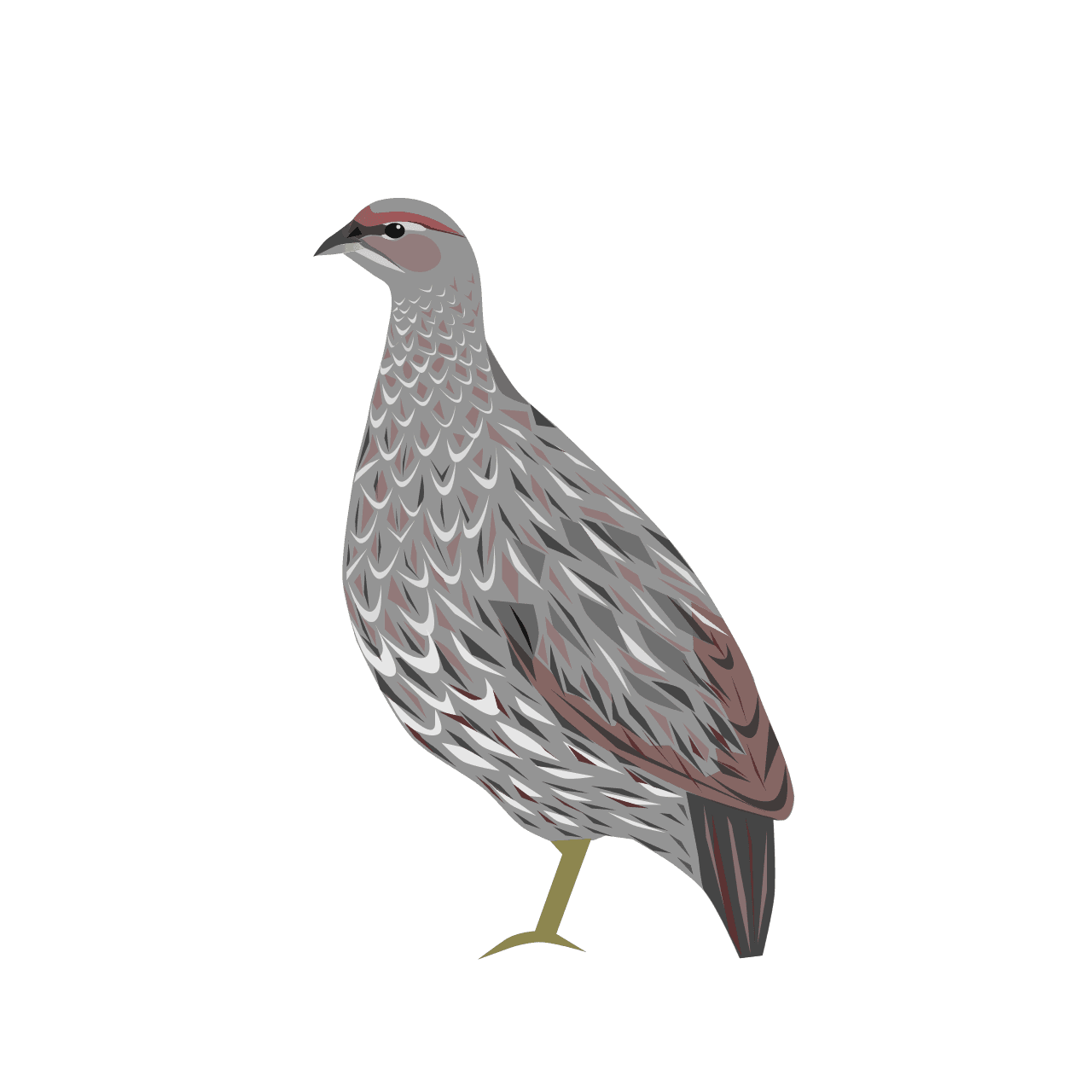
Because the Djibouti francolin lives only in a single small patch of highland forest, scientists worry about it a great deal. If something bad happened to Day Forest - a big fire, for example - this bird could disappear from the planet completely. This makes protecting the forest just as important as protecting the bird itself.
Francolins are ground-feeding birds, which means they spend most of their time walking through leaf litter and undergrowth, scratching for seeds, berries and insects. They are shy and secretive and often easier to hear than to see. Their calls - a series of loud, raspy notes - echo through the forest, especially at dawn and dusk.
Scientists have counted the Djibouti francolin carefully and believe there are fewer than 10,000 left in the wild. Conservation teams visit the forest regularly to check on the population, study the birds' habits and work with local communities to keep the forest healthy. Every nest found is exciting news.
The Djibouti francolin is what scientists call an 'endemic species' - a species unique to one specific place. Djibouti is proud of this bird, which appears on the national coat of arms and reminds everyone that this small country has wildlife found absolutely nowhere else on Earth.